
Curious? Our Technical Manager will guide you through the user interface and show you how easy it is to adjust calculation settings.
Ready to go in seconds - with the right standards and parameters
Specify the standard to be used for the calculation - EA piles or DIN 1054 - and leave the rest to the system.
Thanks to intelligent default settings and clear options, you remain in control at all times and get to the first result without any detours.
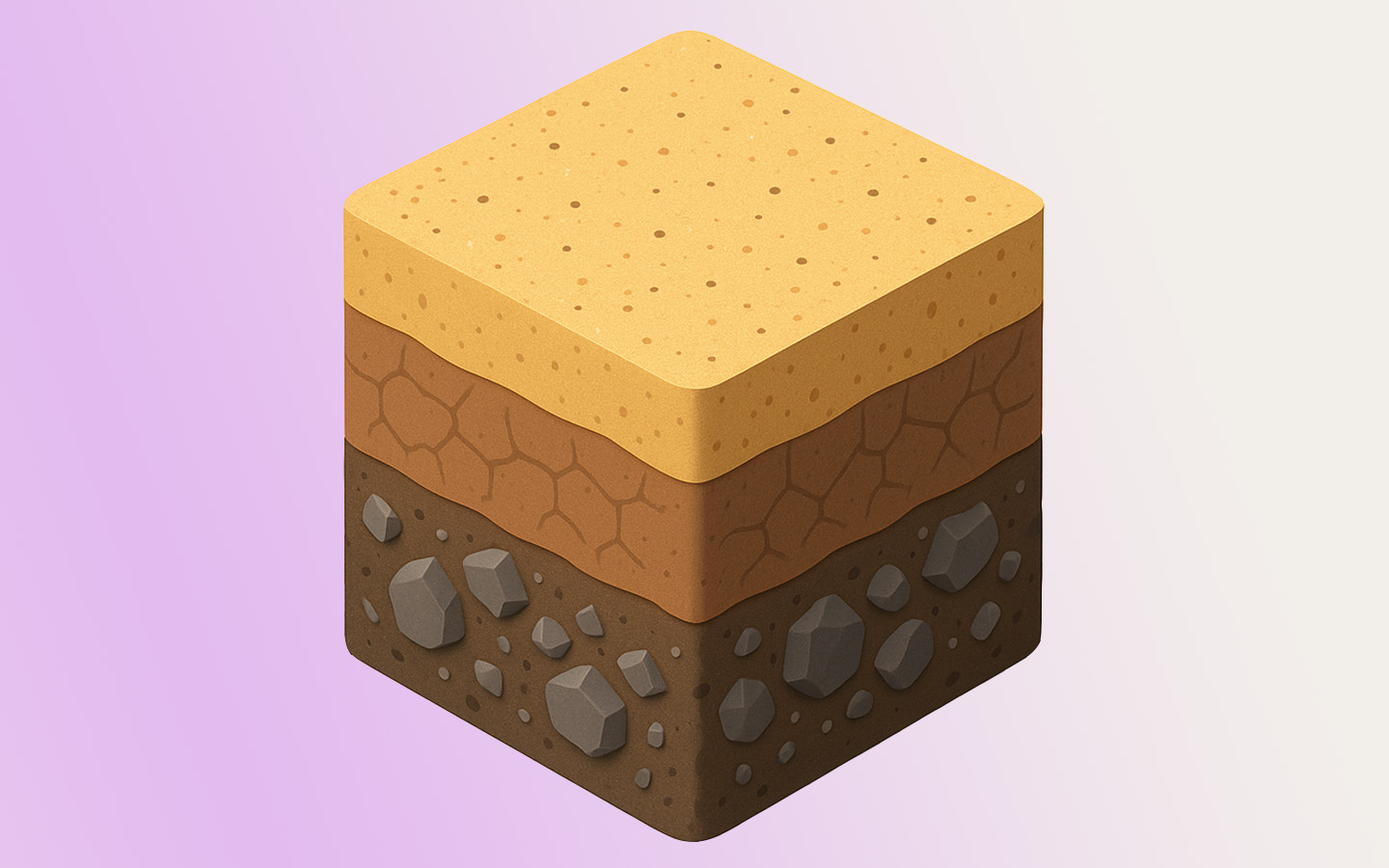
Your soil layers - digital and visually defined
Define precise soil profiles directly in the browser. Define layers, water levels, friction angles and more with just a few clicks.
The intuitive color coding and input aids make orientation easier - even on complex building sites.
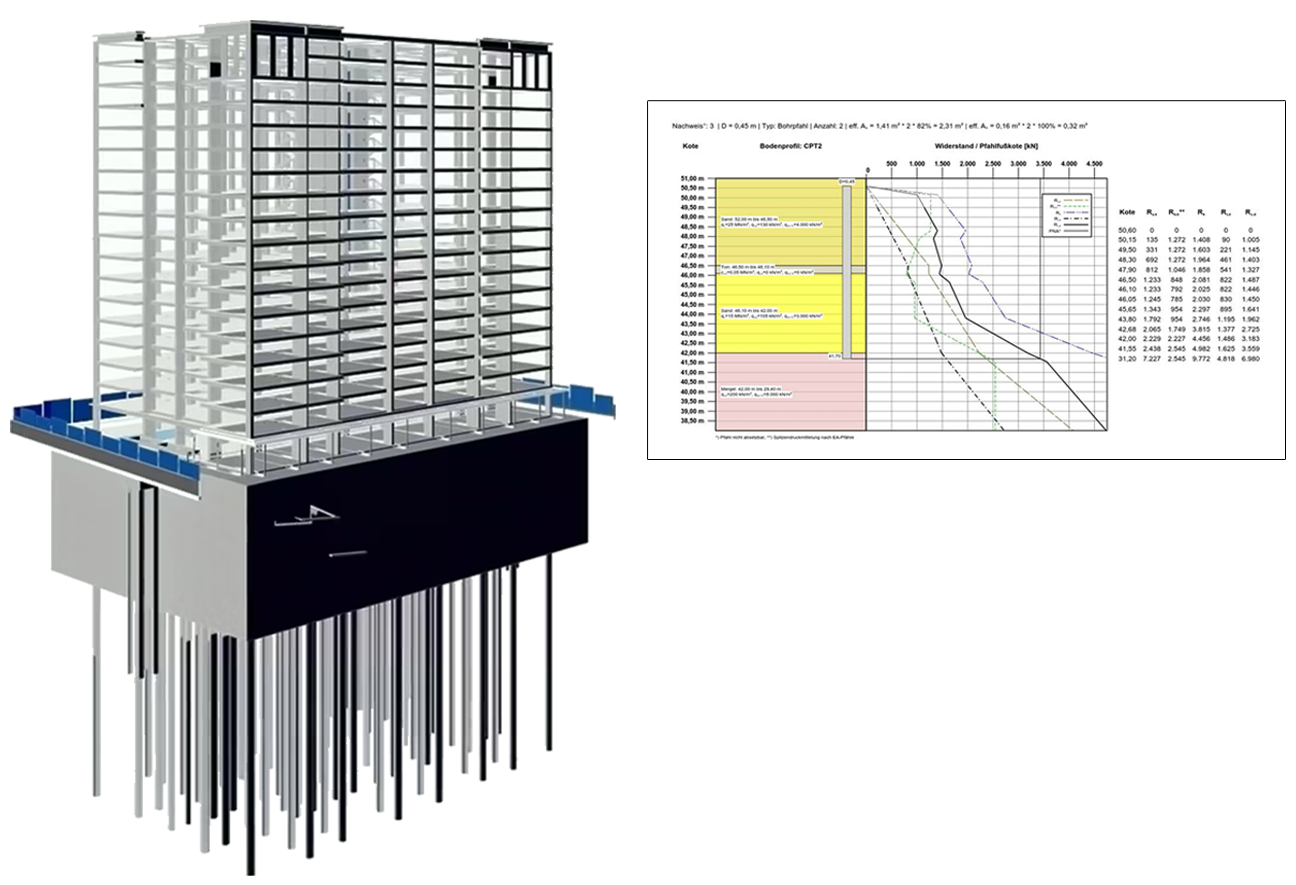
Loads, geometry, resistances - simply calculated
Place piles under your load points, select type, spacing and diameter.
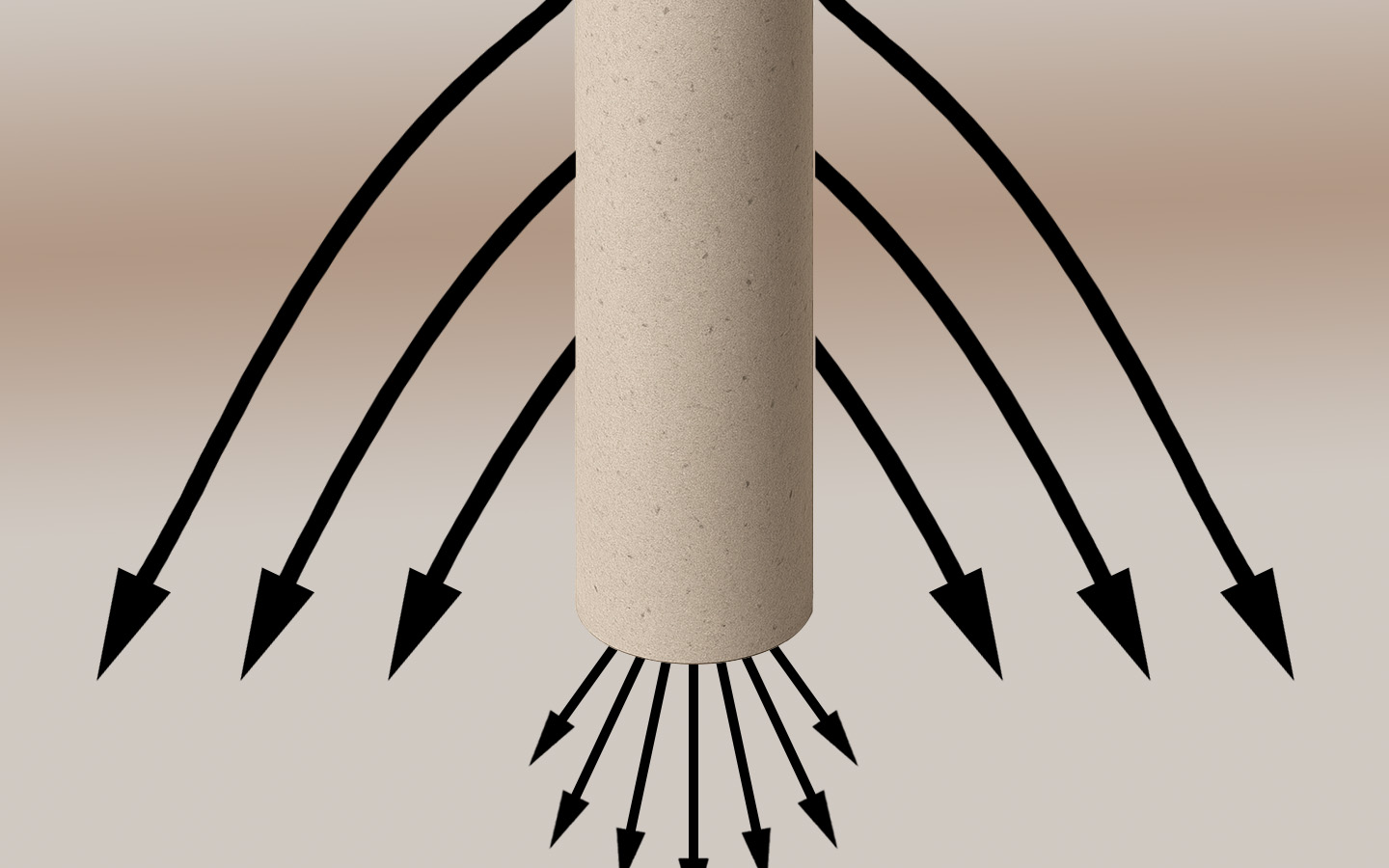
The software automatically calculates the skin friction, peak pressure and settlements - including verifications and optimization of the pile length.
Safe down to the last detail - precisely dimensioned reinforcement
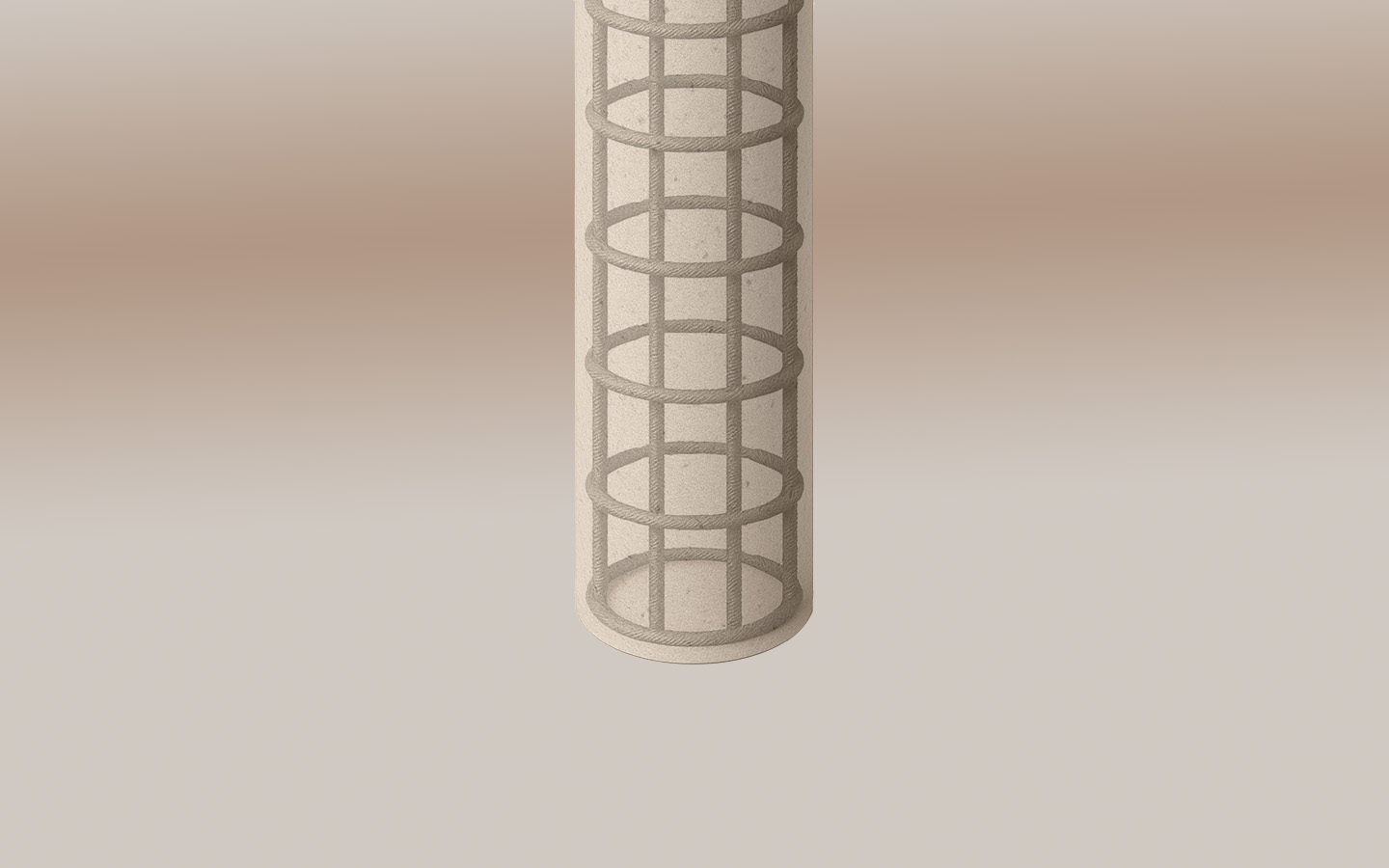
The system calculates the required longitudinal and shear force reinforcement of the pile for all relevant actions.
This ensures that each pile can withstand the structural requirements - including bending, shear force or moments.
Find out from Dr. Ingo Hylla, inventor of the Piledesigner calculation kernel, why conventional software can only calculate piles in groups - and how his solution makes it possible for the first time to design each pile individually according to vertical and horizontal loads.
No more manual steps in outdated desktop applications

Manage and calculate multiple load cases simultaneously to save time and increase accuracy.

Create individual floor profiles and adapt them flexibly to the specific conditions of your project.

Determine the external and internal load-bearing capacity of your piles, taking into account all relevant loads and soil conditions.

Calculate the required reinforcement based on the specific loads on each pile to ensure maximum stability.

Get graphical representations of design results that make it easy to check stability and other important parameters.

Take advantage of a user interface designed to make your measurement process as efficient and user-friendly as possible
"With Piledesigner.io, we were able to measure all the piles exactly in the browser on a project-specific basis - quickly and precisely, without installation. This not only saves material and CO₂, but also brings real efficiency to planning."
Daniel Bacon, Technical Manager gbc engineers GmbH
Didn't find the answer to your question? Contact our support team by email - we will answer you as soon as possible.
The external load-bearing capacity describes how much load is absorbed by the soil via skin friction and peak pressure. The internal load-bearing capacity checks whether the pile itself (concrete and reinforcement) can withstand this load.
You must specify at least the drilling point, the layer distribution, soil types, friction angle φ, cohesion cᵤ, the weight γ/γ', and qc values if applicable.
This option determines whether the pile may end in this layer. It is relevant for optimizing the pile length.
Depending on the selected set of rules, the software accesses suitable tables in the background and automatically sets friction and pressure values correctly.
You can specify a maximum settlement (e.g. 5 mm) in the project. The software checks whether a pile can bear the load at this settlement.
By default, entered profiles are used. In future, a kriging-based interpolation will be integrated to estimate these gaps more accurately.
R<sub>d</sub> ist der Bemessungswiderstand des Pfahls. Er ergibt sich aus der Summe von Mantelreibung und Spitzendruck geteilt durch einen Sicherheitsfaktor.
E<sub>k</sub> ist die charakteristische (reale) Last. E<sub>d</sub> ist die Bemessungslast mit Sicherheitsfaktor – relevant für den Tragfähigkeitsnachweis.
Yes, you can specify the number, diameter and spacing of the piles for each load point. The software then calculates the load distribution, resistance and settlement.
You can use verification groups to combine several load points that are to be dimensioned identically or similarly - e.g. for recurring foundation conditions.
Experience how easy and efficient your planning can be with our user-friendly input mask.
You need to load content from reCAPTCHA to submit the form. Please note that doing so will share data with third-party providers.
More Information